How company culture shapes employee motivation
Learn More


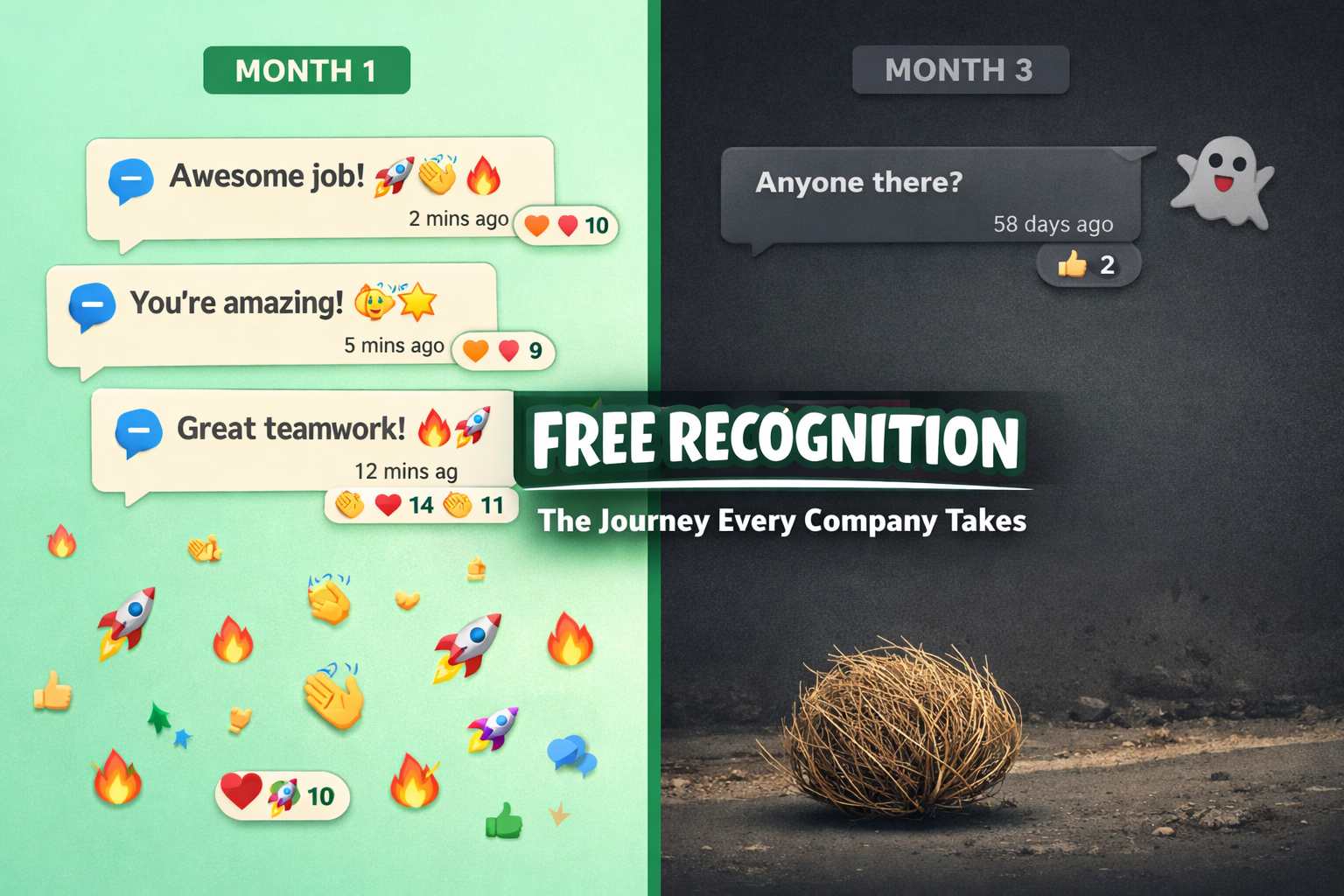
The engagement survey landed and employees don't feel valued, so your HR team pitched a recognition platform.
You pushed back. "Why pay for something we can do for free?"
Fair point. HR wanted structure, you wanted free—Free won.
So HR opened a Slack/ MS Teams channel called #shoutouts, typed up an announcement, and hit send.
It worked. Messages were flowing, emoji reactions piling up, and you started thinking: if this keeps up, we might actually move the needle on the engagement survey. Maybe even retention.
You sent your CHRO a screenshot with a note: "See? We didn't need to spend the money." (Half-joking)
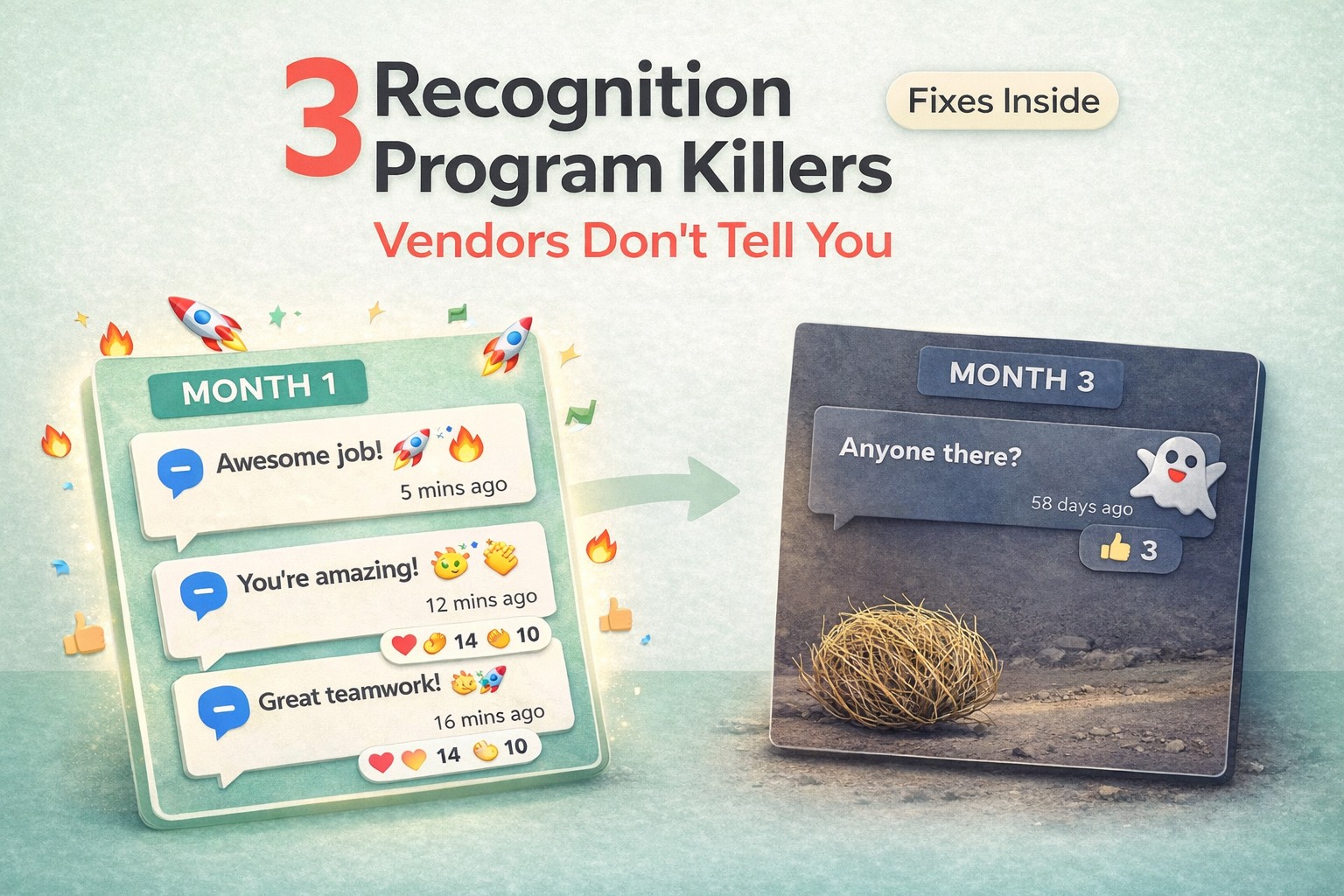
Two months pass. You haven't opened #shoutouts in weeks, so you check it now. Last message: 58 days ago. Same person who always posts. Four emoji reactions, two from HR.
Now people open the channel, see the awkward silence, and close it without posting.
Then your engagement survey comes back. "I feel appreciated for my contributions." The score dropped. Again.
Your CHRO forwards you a stat: "79% of employees who quit cite lack of appreciation as the primary reason." (Also half-joking)
And now you're wondering how many people are already halfway out the door, mentally if not literally.
It's not your fault.
Most recognition programs are built to raise morale for a few and make everyone else feel more invisible.
After launching 250+ recognition programs, I've seen the same pattern: most companies try free channel recognition first, and most hit the same wall.
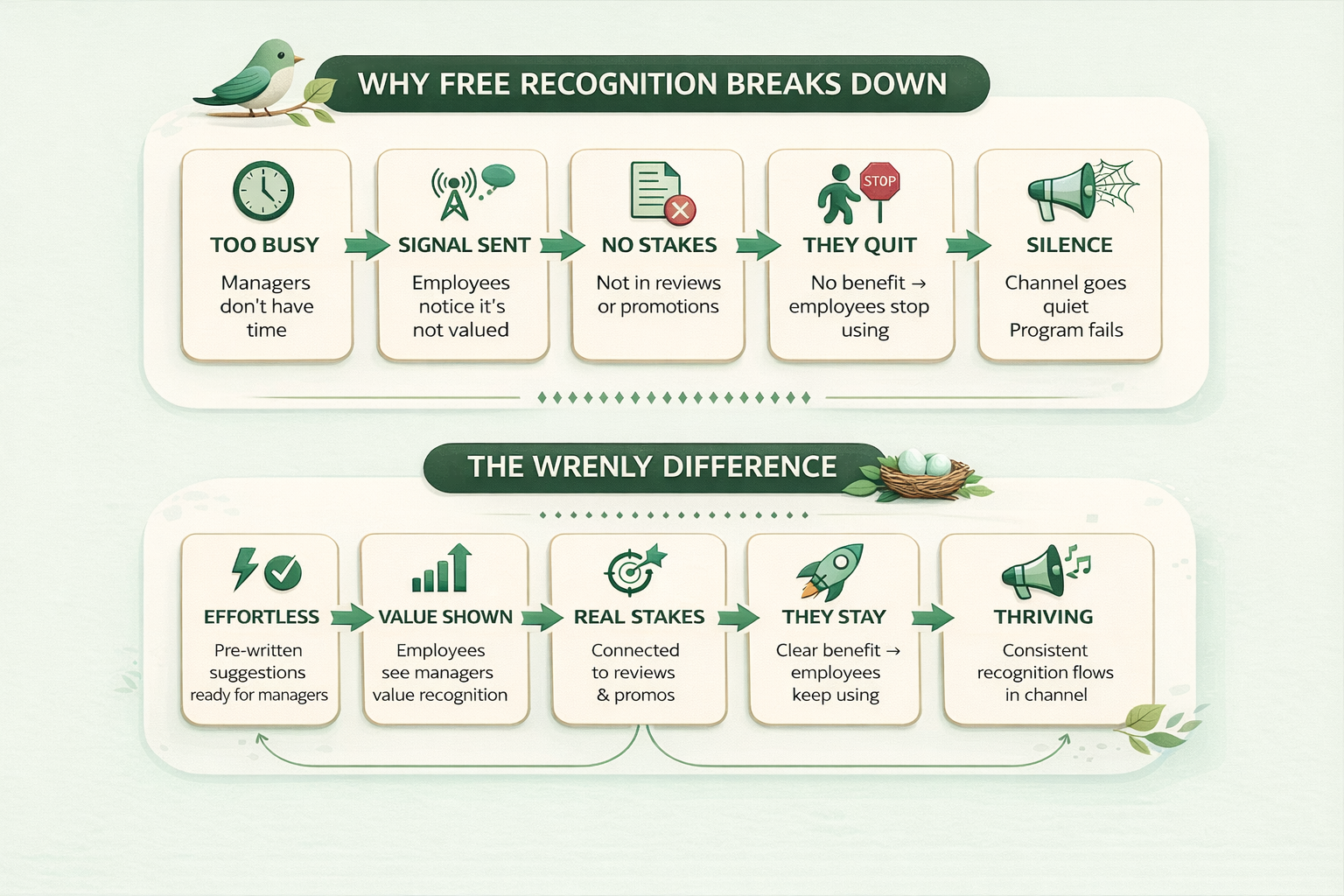
Managers respond to what demands their attention. Emails pile up until they're answered. Meetings block calendars. Tickets escalate if ignored. Recognition just sits in a channel, waiting for someone to remember between everything else.
You know your managers. What do you think most of them will do?
Their teams notice. Post a few recognitions anyway, wait for them to come up in their 1:1. They don't. Performance reviews arrive. Nothing there either.
So they stop. If recognition isn't connecting to the conversations that matter for their career, what's the point?
The channel goes quiet. What you launched to show people they're valued just proved recognition doesn't matter here.
What if recognitions arrived pre-written, ready to send for managers, and connected to reviews and 1 on 1s?
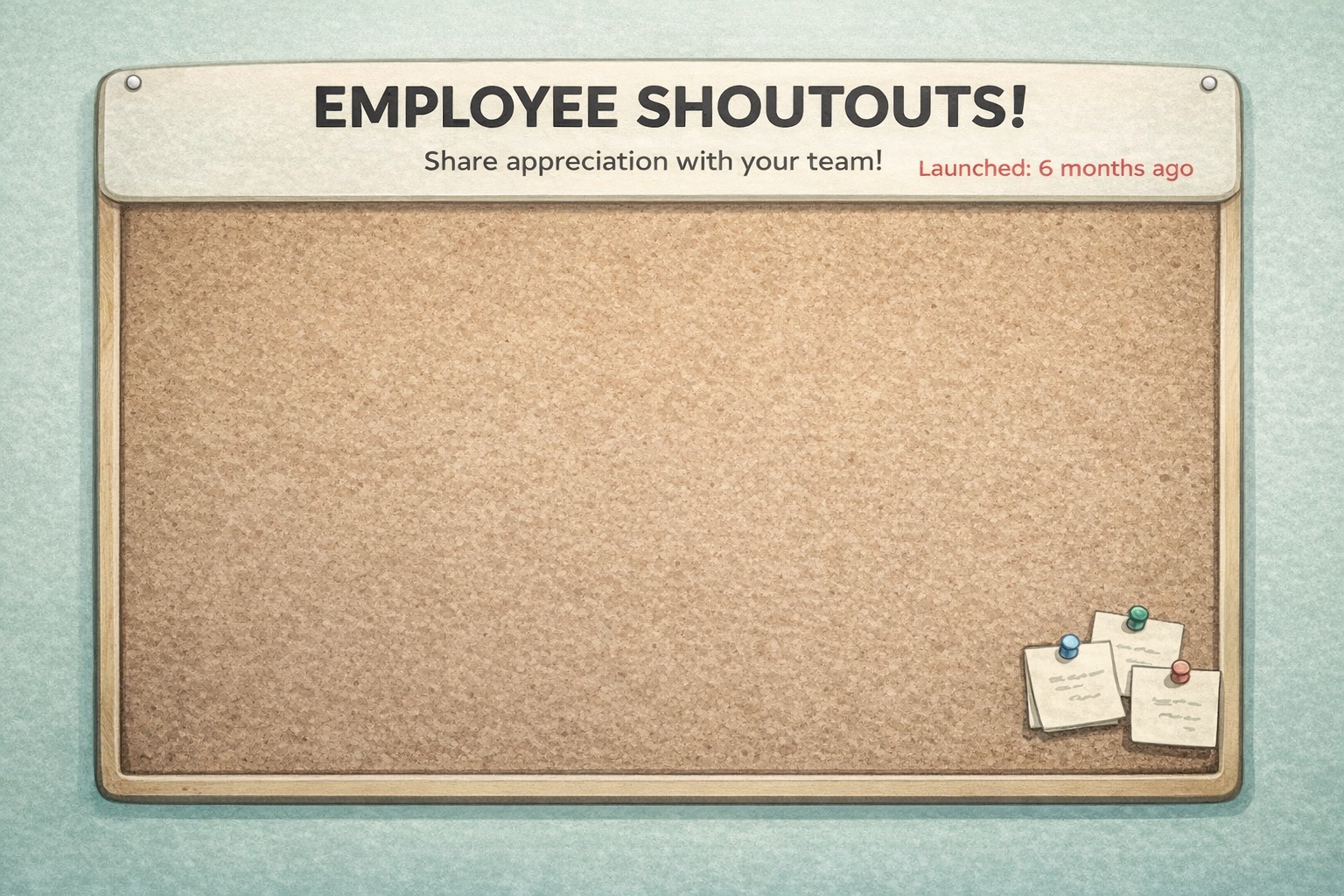
Sales closes a $200K deal? Champagne emojis everywhere. Finance saves $400K through a vendor renegotiation? Crickets.
Before the channel, some people felt their work went unnoticed. After launch, they're watching other teams get celebrated daily while their contributions feel overlooked.
You built a feed that shows everyone whose work gets attention and whose doesn't.
The people who told you they feel undervalued? Still do. Where do you think that engagement score is heading?
What if recognition systems surfaced invisible work and leveled the playing field?
Performance review season. You asked your managers to submit promotion recommendations with supporting evidence.
They open the #shoutouts channel to pull examples. Scroll back through months of messages. Find three recognitions from eight months ago. Close the tab.
So they write from memory. Last month's wins. Last quarter's projects. Whatever's top of mind.
The promotion cases come back thin. Recent accomplishments, yes. But the full year? Gaps everywhere.
Your VP asks about the Finance Manager's promotion. "What did she accomplish in Q2?" Your Engineering lead pulls up his recommendation. "I know he shipped something major in April, but I can't remember what."
The work happened. The impact was real. But when there's no system capturing it, memory is all they have.
And memory only goes back 60 days.
| Factor | Free Channel ($0 Recognition) | With System |
|---|---|---|
| Manager participation | Find time, remember who did what, write something, post, repeat forever. | Pre-written suggestions arrive - one click to send. |
| Connection to career | Disappears into a channel - no 1:1s, no reviews, no promotion support. | Recognition flows into 1:1s & performance reviews. |
| Employee participation | Managers aren't using it, no career benefit, so they stop. | Managers participate, career stakes are real, they keep using it. |
| Quiet wins visibility | Only loud work gets seen. The majority feel more overlooked than before. | System surfaces all contributions, not just the visible ones. |
| Insights | No metrics. | Insights show who is falling behind. Nudges trigger automatically. |
| Promotion decisions | No data, so you go by memory and reward visibility over contribution. | Ask "Who drove impact?" and get a year of evidence. |
| "Valued" score | Root causes never fixed. Score drops again. | Friction removed. Career connection built in. Score moves. |
Even some paid recognition platforms hit these same walls. Free or paid doesn't matter if the design is broken. Here's the fine print most vendors won't tell you about why adoption dies after 90 days.
The best recognition programs don't need the biggest budgets or fanciest gift cards - they need to form a habit, and habits only form if there's minimal friction.
So we designed a self-sustainable recognition loop:
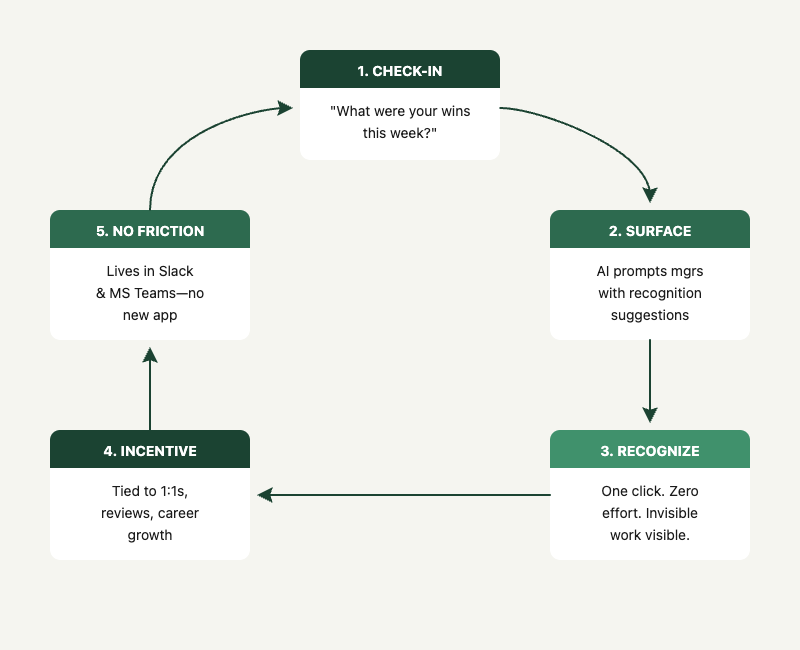
A loop that starts with one question: "What did you accomplish?" so every win gets captured, visible or not.
A loop that delivers those wins as ready-to-send recognitions to managers. One click, done.
A loop that ties recognition to reviews and promotions, so employees stay invested.
A loop that lives in Slack or Teams, so there's nothing new to adopt.
You stop tracking who did what - wins surface on their own, managers send recognition without carving out time, quiet contributors get seen, and when promotion decisions come around, you have a year of evidence instead of memory.
Why did you consider a recognition program in the first place?
It wasn't to send more nice messages. It was because your team told you, directly in a survey, that they don't feel valued.
But here's what a free channel actually does: it sends more nice messages to the people who were already visible. Meanwhile, the majority, the ones who told you they feel overlooked, stay overlooked.
More recognition doesn't fix the problem. It amplifies it.
Free recognition costs you nothing to launch and everything when it fails.
So the next time someone asks "why pay for something we can do for free?" the answer is simple:
What's the cost of another flat engagement score? Another year of promotions based on visibility instead of contribution? Another batch of top performers who quietly decided they'd rather be valued somewhere else?