Free Recognition Is the Most Expensive Kind
Learn More


You convinced your executive team to launch Recognitions.
The first 90 days were a dream. You gave your CFO the "I told you so" face.
The discombobulated teams are talking again. The office TV is packed with shoutouts. Morale is up.
Isn't this why they hired you—to change the culture? 🦸
Then one day you wake up, rub your eyes, and realize the dream was short-lived.
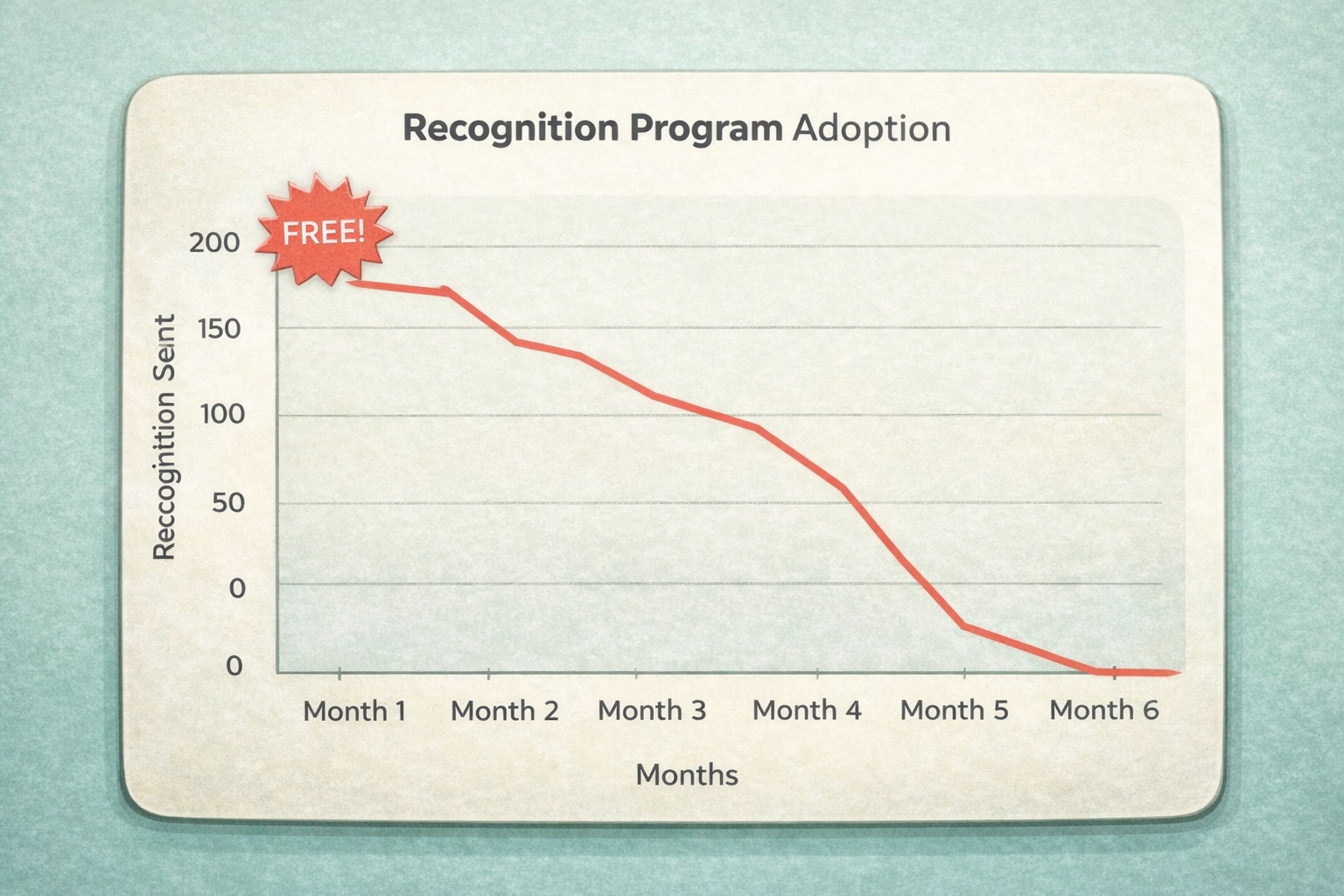
Recognitions are declining. The whole company used to celebrate. Now it's the same 4 people, tossing "👍" at each other.
You're dreading the "I told you so" face from your exec team.
It's not your fault.
Most recognition programs are built to raise morale for a few—and make everyone else feel more invisible.
A lot of HR teams get distracted by the shiny stuff; Amazon integrations, gamification badges, fancy apps.
I've launched 250+ recognition programs. Many took off. Some didn't survive 90 days.
We studied every one to figure out why.
Picture this.
You've racked up recognition over the past few months. Real wins. But your manager never mentions them.
Not in 1:1s. Not in team meetings. And when your performance review comes around?
Not a single one gets brought up.
Why would you keep using the tool?
Recognition needs to be more than a nice message, for it to survive the 90 day adoption cliff.
"Hey Manager, can you giv–"
"I'm busy"
How many times have you been through this?
If managers don't participate, employees follow suit, and adoption bleeds.
The message is clear. My manager doesn't care. Why should I?
Managers aren't the villain here. They care- they're just buried. Recognition takes time they don't have.
What if recognition suggestions showed up in Slack / MS Teams- already written, ready to send? 🤔
Ever notice the same people get all the spotlight? *rolls eyes*
Sales closes a $200K deal? Champagne emojis everywhere.
Finance saves $200K through a vendor renegotiation? Crickets.
Customer-facing wins are loud. Back-office wins are invisible. And badly executed recognition programs widen the gap.
The few feel celebrated. The many feel invisible. Net culture impact? Negative.
What if recognition systems surface quiet wins- not just the loud ones?
The smartest HR leaders make invisible work visible.
The average employee already juggles 36+ apps.
Please, do not give them another dashboard. Another login. Another 'quick' SSO
It will get forgotten.
People DO want to recognize one another.
But that 10 seconds in switching tools is enough for them to say "I'll do it later…"
What if recognition didn't require going anywhere new?
The best recognition programs don't need the biggest budgets or fanciest gift cards
They need to form a habit.
a) Where managers give recognition-without investing any extra time.
b) Where quiet contributors finally get seen.
c) Where employees have a personal reason to keep participating.
d) And do it all without launching another app.
Here's how.
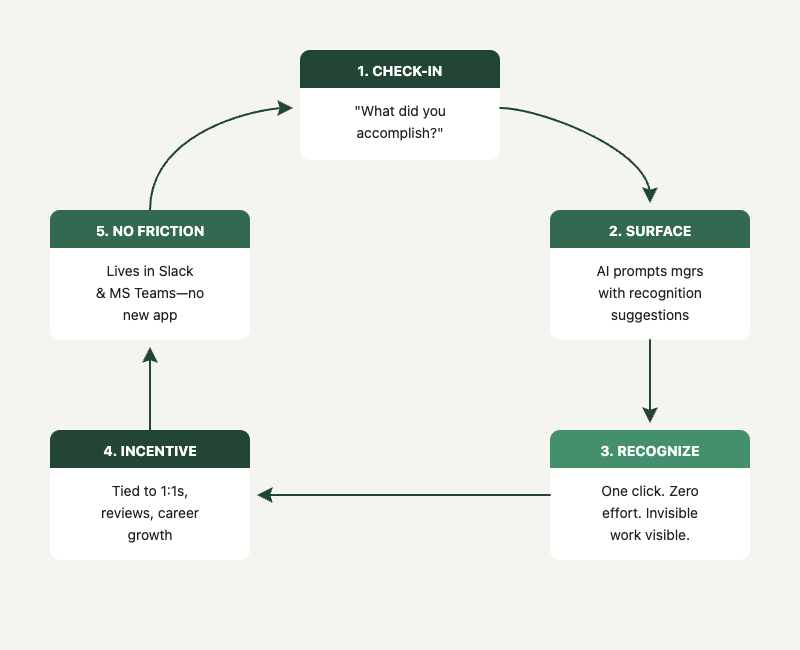
Check-in. Once a week, employees answer one question: "What were your wins this week?"
Surface. Wrenly reads the wins and suggests pre-written recognitions to managers.
Recognize. One click. The manager recognizes their team, with no extra effort.
Incentive. Those wins don't vanish. They get pulled into 1:1s, review reports, promotions. Recognition becomes career growth.
No friction. No new app. No new habit to build. It all happens in Slack or Teams.
Right to be skeptical. Most recognition programs do waste resources.
But the ones that work? They build recognition loops that keep employees feeling valued and appreciated.
In the long run, they pay for themselves by helping you promote the right people and retain the right talent.
Here's walking you through the recognition loop above in Slack & MS teams
Here's my linkedin if you have any questions